Our Light Unbound

Timeline:
Jun 2024 – Jan 2026
Role:
Co-Curator, Design & Dev
Tools:
Google Drive, Eventbrite, Instagram, Figma, HTML/CSS/JS

A mobile-first digital catalogue for a curated art exhibition — designed so every visitor can pull up the catalogue on their phone while standing in the gallery, discovering the art and artists behind a show celebrating hope, resilience, and creative freedom.

View Live Site →
Our Light Unbound mobile catalogue showing the exhibition title, artist statement, search bar, and accordion-style artist list on a deep purple gradient background

Overview

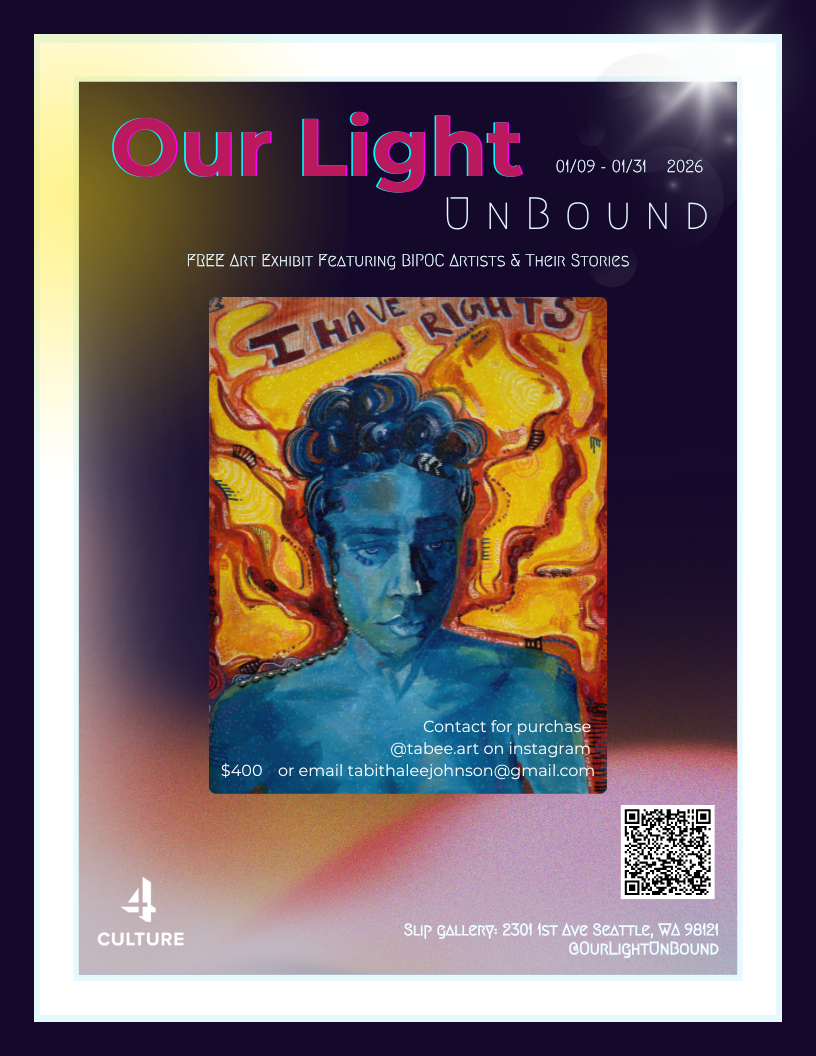
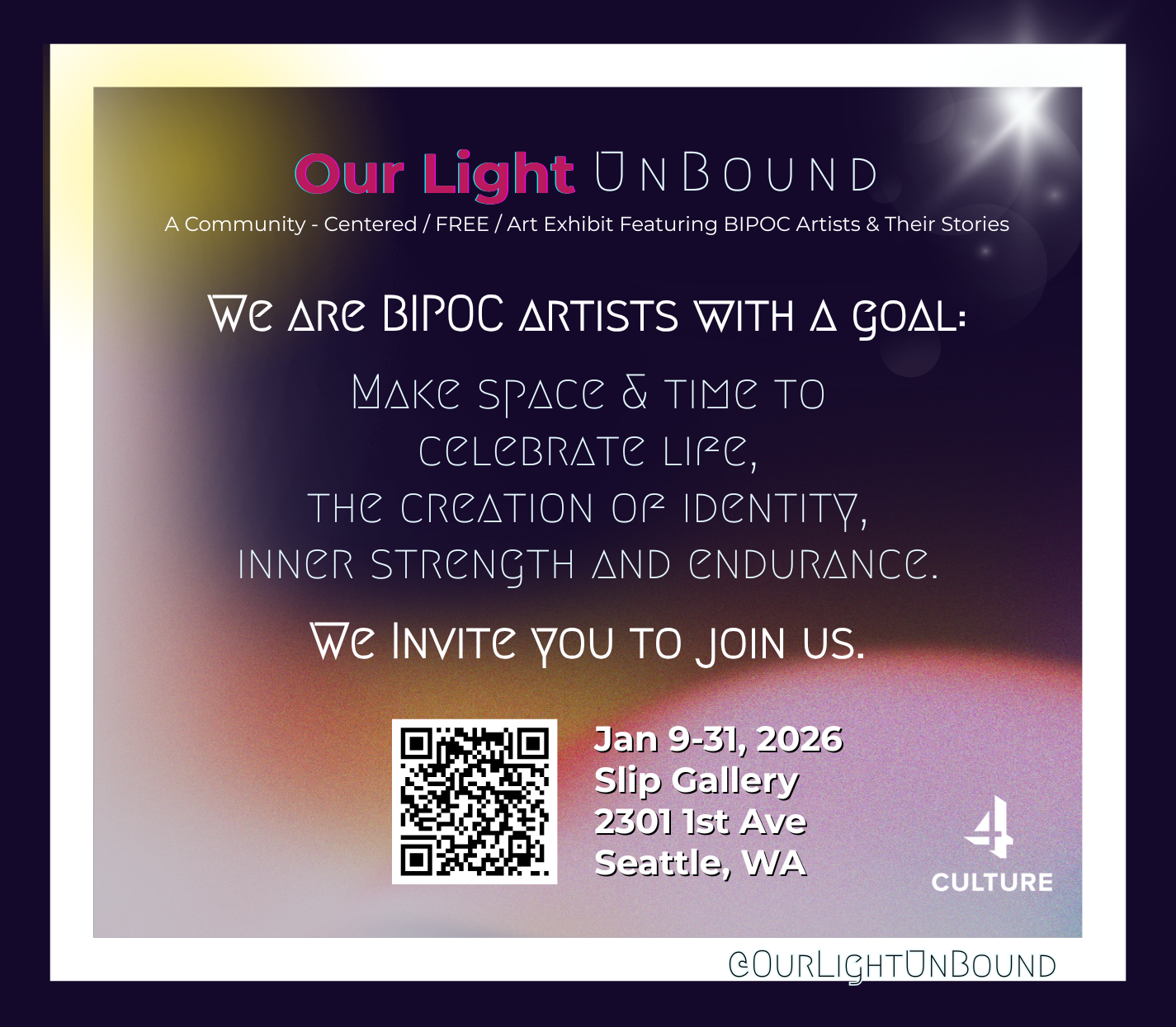
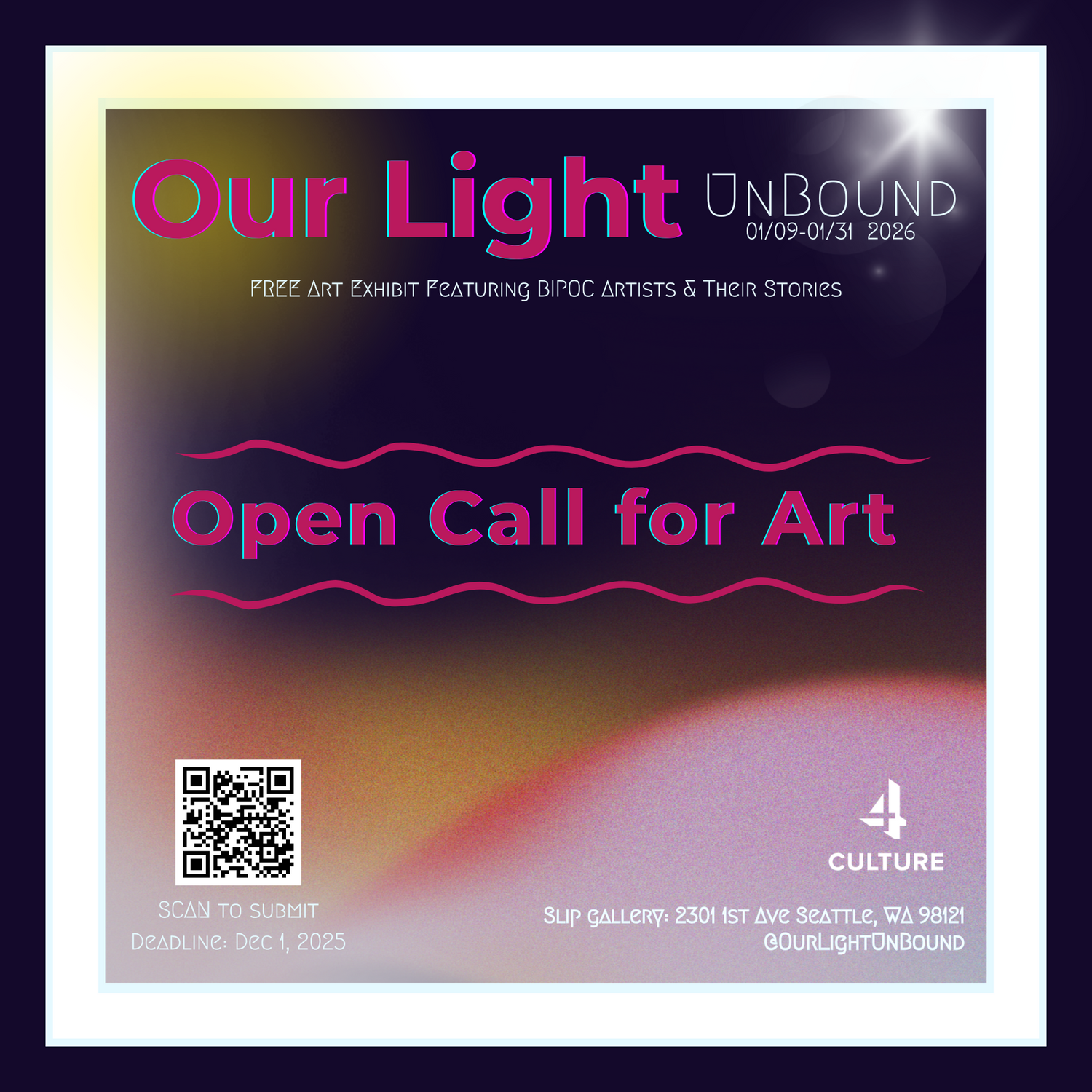
"Our Light Unbound" was an art exhibition running January 9–31, 2026 that explored tapping into the part of ourselves that believes peace will return — the part that inspires us to believe, hope, and dream again. I co-curated the show alongside Yaz (they/them), and together we built a strong social media presence and community integration around the exhibition over the course of a year and a half of planning.

For the exhibition's digital catalogue, the question was: how do we create a compact, mobile-friendly, and accessible way for people to discover the art and artists — right from their phones while standing in the gallery? The catalogue was designed mobile-first, because that's exactly how visitors would use it: scanning a QR code at the entrance and pulling it up on their phone. It was built in collaboration with the artists themselves, who provided their bios and art descriptions, and Yaz supported design decisions throughout.
Traditional gallery practice is to print artist statements and descriptions to display alongside artwork, but that creates barriers to access: limited font sizes, finite wall space, and visitors crowding around small text to read. A mobile-first digital catalogue eliminates those issues entirely — visitors can browse at their own pace, on their own phone, with text they can resize and content they can search.

Goals

  • Create a compact, navigable digital catalogue that replaces printed artist statements
  • Make every artwork and artist discoverable whether visitors are in-gallery or at home
  • Ensure full accessibility in a dark-themed, atmospheric design
  • Provide clear paths to gallery hours, events, and purchasing

Constraints

  • Dark color scheme required to match the exhibition's visual identity
  • Content dependent on artists providing their own bios and descriptions
  • Site needed to launch before the exhibition opening night
  • Design decisions made collaboratively with co-curator Yaz

Curation & Planning

Yaz and I began planning "Our Light Unbound" a year and a half before opening night. We used Google Drive as our shared workspace, building out a detailed month-by-month timeline with buffer room for the unexpected — travel schedules, shifting deadlines, and the realities of coordinating with a group of working artists. We divided responsibilities clearly: I led workshop scheduling, artist communication, reception logistics, and the digital catalogue; Yaz focused on merch design, social media content, and visual identity for promotional materials.

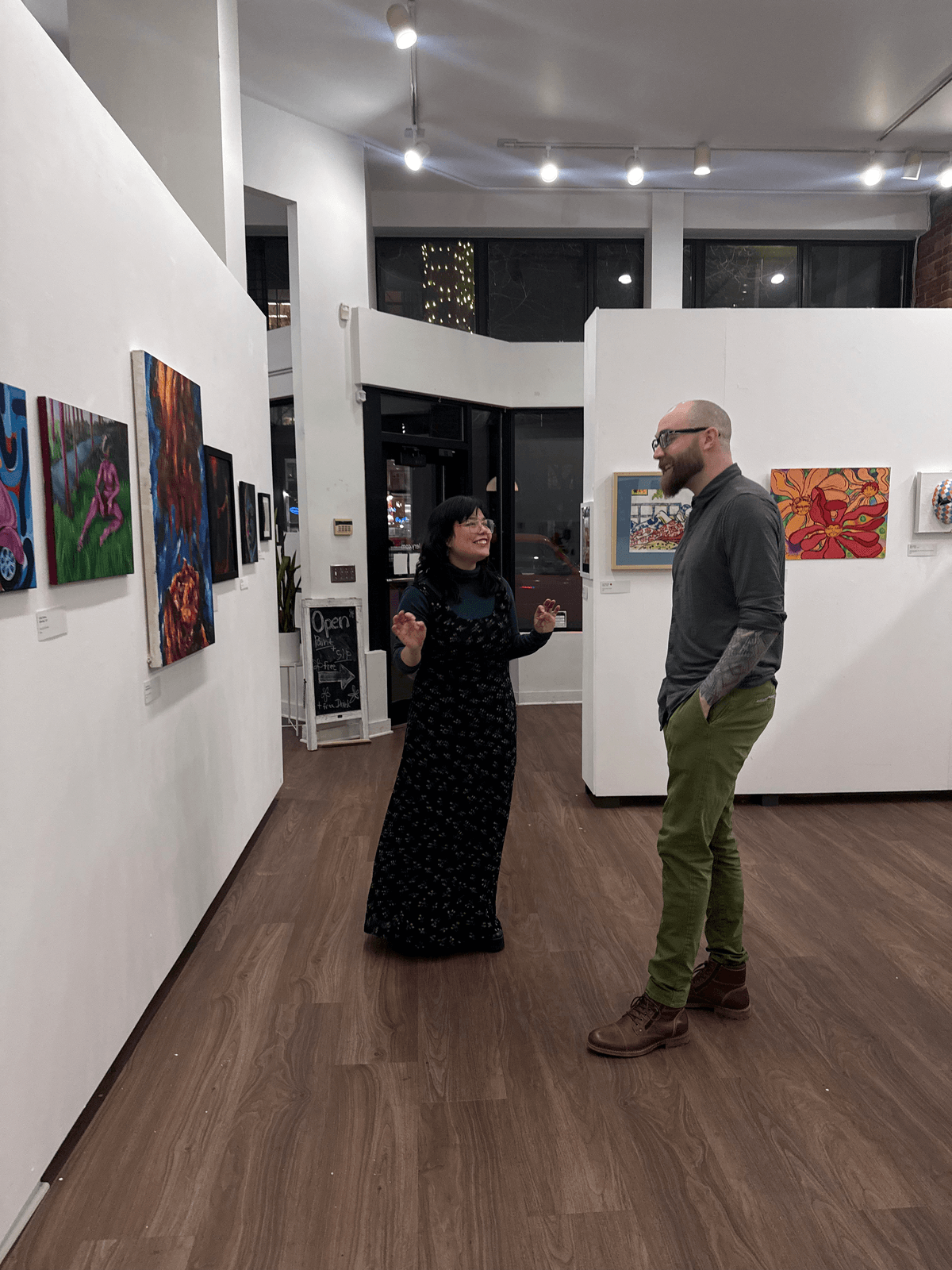
Two people in conversation at the gallery, surrounded by artwork including paintings and a world map, with art on display throughout the space
Curators in conversation on opening nightPhoto: @svetim.fm

The Timeline

We mapped every phase from initial planning through closing night. Here is a condensed view of the major milestones:

Sep – Nov 2024: Foundation

Yaz: Co-established plan of action, confirmed meeting cadence, visited the gallery space, created vision board.
Lidia: Outlined roles and responsibilities, started drafting artist contracts and documentation, began working on budget and finances.
Together: Finalized which space we would use.

Dec 2024 – Jan 2025: Theme & Outreach

Yaz: Created the @our_light_unbound Instagram account and started collecting social media content.
Lidia: Sent artist invitations with a February deadline. Began planning the group artist project and set up Eventbrite for the show and workshops.
Together: Solidified the exhibition title, theme, and description.

Feb – May 2025: Artists & Grants

Yaz: Kicked off early design work for promotional materials.
Lidia: Started workshop ideation and scheduling with artists. Drafted and finalized artist contracts. Began grant hunting and submitting applications.
Together: Confirmed artist participation — number of pieces and artists locked in.

Jun – Sep 2025: Design & Production

Yaz: Completed design for flyers, window display, and merch. Began artist shoutout campaign on social media.
Lidia: Hired a musician for the reception. Built Eventbrite pages for all events and workshops. Started digitally organizing the gallery layout.
Together: Outreach and planning for opening night — including requirements for the wine bar.

Oct – Nov 2025: Final Production

Yaz: Merch finalized and ordered (magnets, totes, stickers, postcards — split between artist-fund and show-themed categories). Published artist shoutouts and submitted to Art Display magazine.
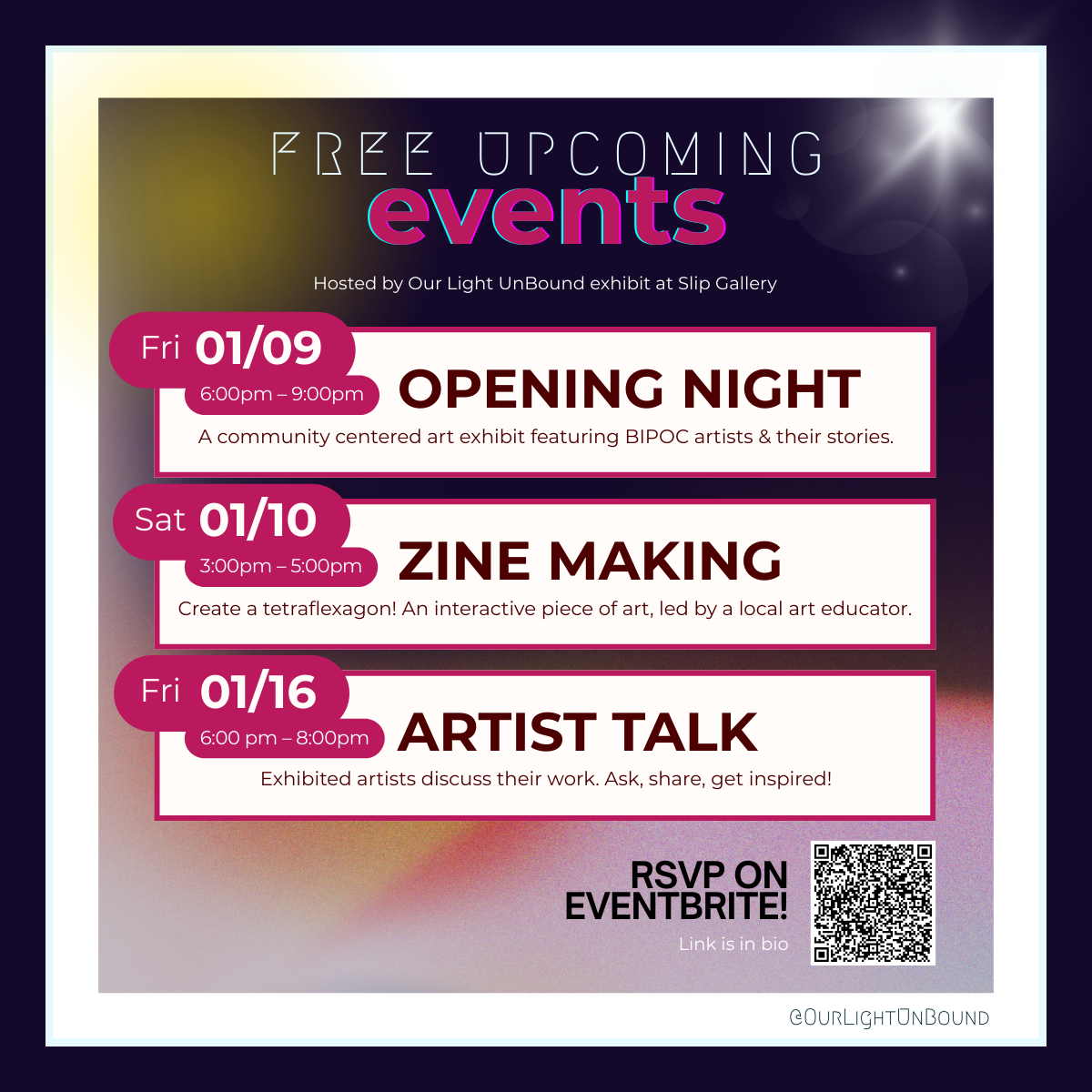
Lidia: Completed Eventbrite pages and created event-specific flyers with links. Finalized workshop schedules — collage, paint and sip, origami, and artist talk.
Together: Partnered businesses began displaying merch and flyers.

Dec 2025: Final Push

Yaz: Designed the gallery description window cling. Prepped interactive installations.
Lidia: Finalized artist list and artwork list, signed contracts. Made art labels, hired art installers, and planned gallery layout. Collected artwork descriptions and bios from artists. Produced the digital catalogue website. Created and printed QR codes for the gallery entrance.
Together: Ordered workshop supplies and got volunteers.

Jan 2026: Showtime

Yaz: Installed window display. Curated a playlist for the vibes.
Lidia: Ran workshops throughout the month (collage, paint and sip, origami). Secured banquet permit for closing event.
Together: Artwork delivered January 1–7. Physically decorated the space — placed labels, set lighting. Artist reception and opening night January 9 with DJ Tremendadiosa. Closing event January 31.

Community & Social Media

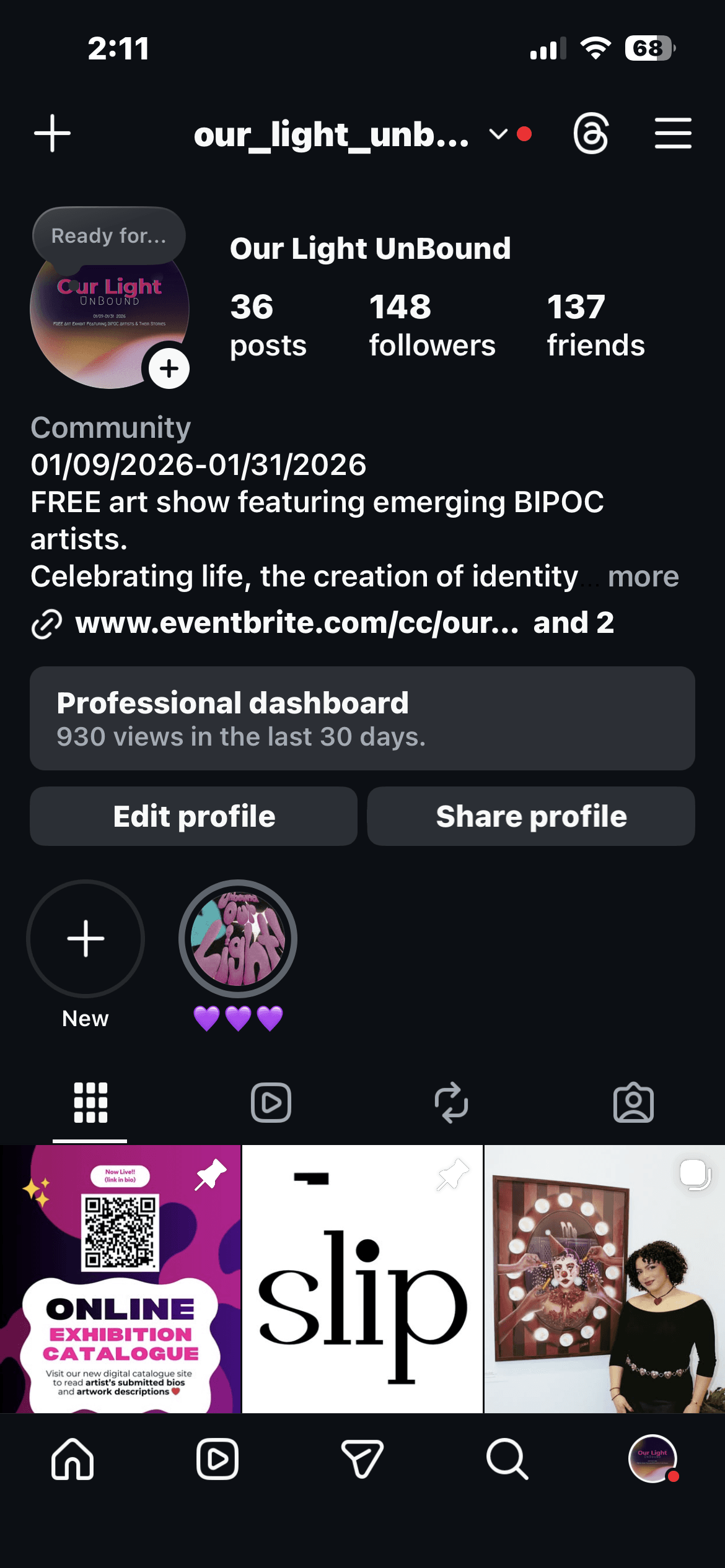
Community integration was central to the exhibition from the start. We created the @our_light_unbound Instagram account early in the planning process and used it to build excitement, spotlight artists, and promote events. By opening night the account had 36 posts, 148 followers, and a reel about the exhibition that reached 2.5K views with 119 likes.

Our Light Unbound Instagram profile showing 36 posts, 148 followers, and bio describing a free art show featuring emerging BIPOC artists celebrating life and the creation of identity
Instagram profile at opening night — 36 posts, 148 followers
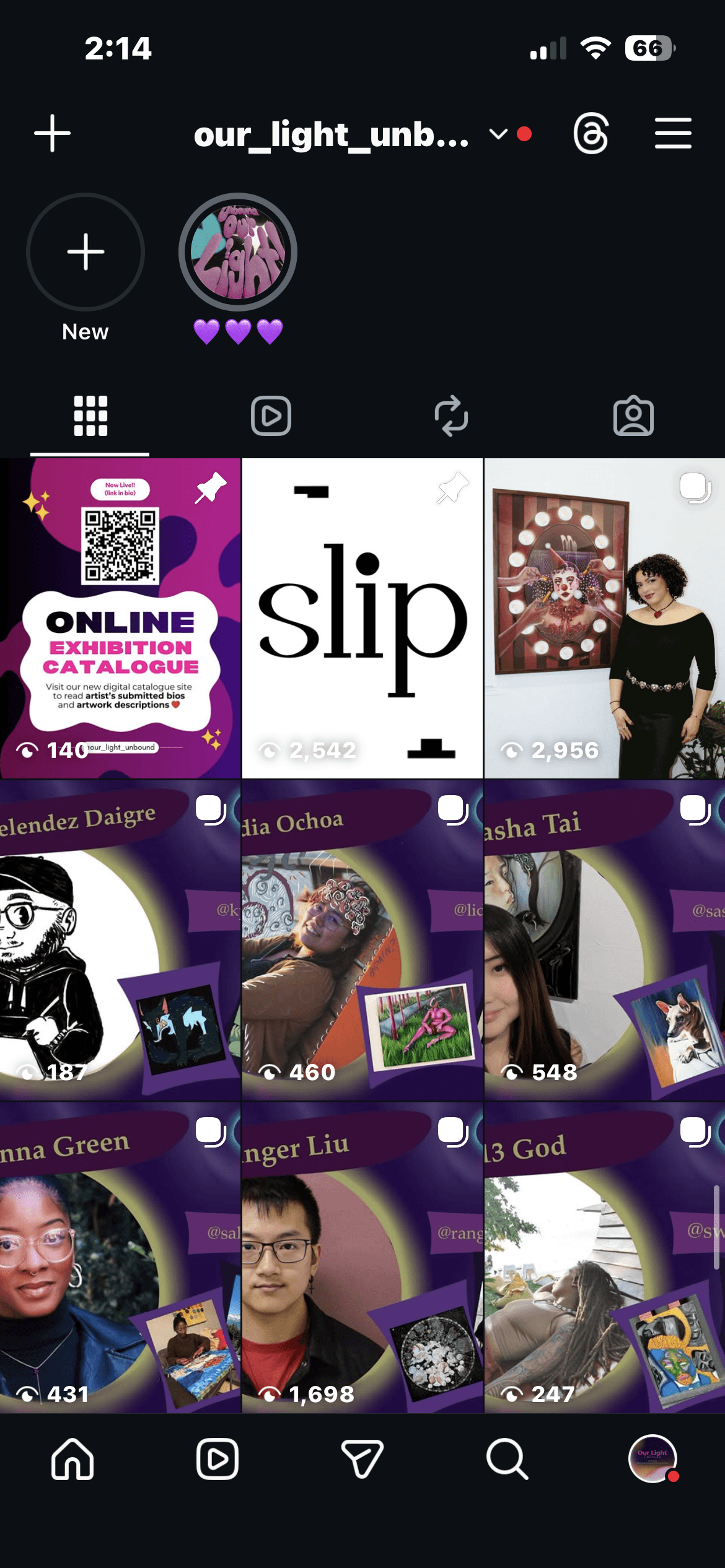
Instagram grid showing artist shoutout posts, the online exhibition catalogue announcement with QR code, and collaboration posts — individual artist spotlights received between 247 and 1,698 views
Artist shoutouts and catalogue QR code announcement
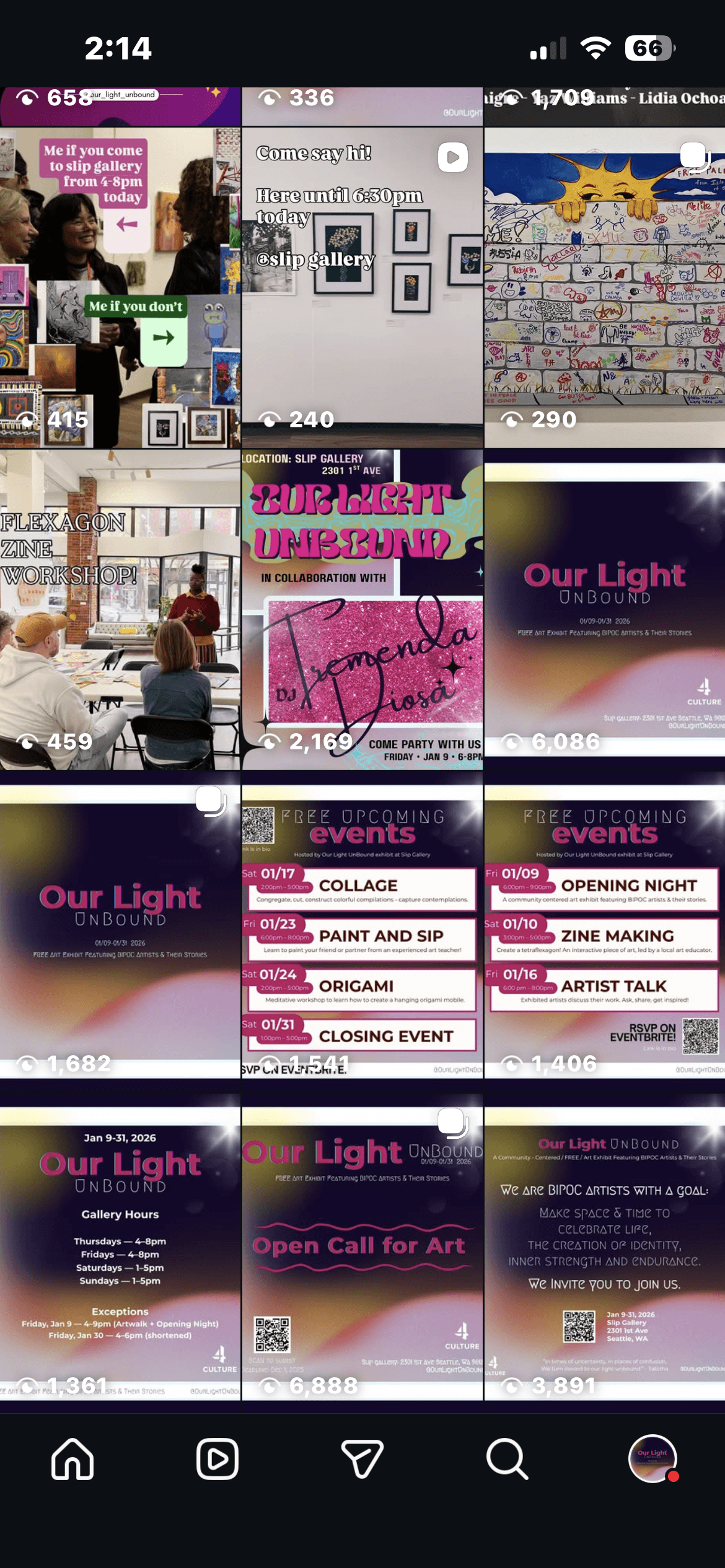
Full Instagram grid showing the range of content: gallery hours, open call for art, event flyers for workshops and the reception, stories, and reels from the exhibition
Full grid: event flyers, open calls, stories, and reels
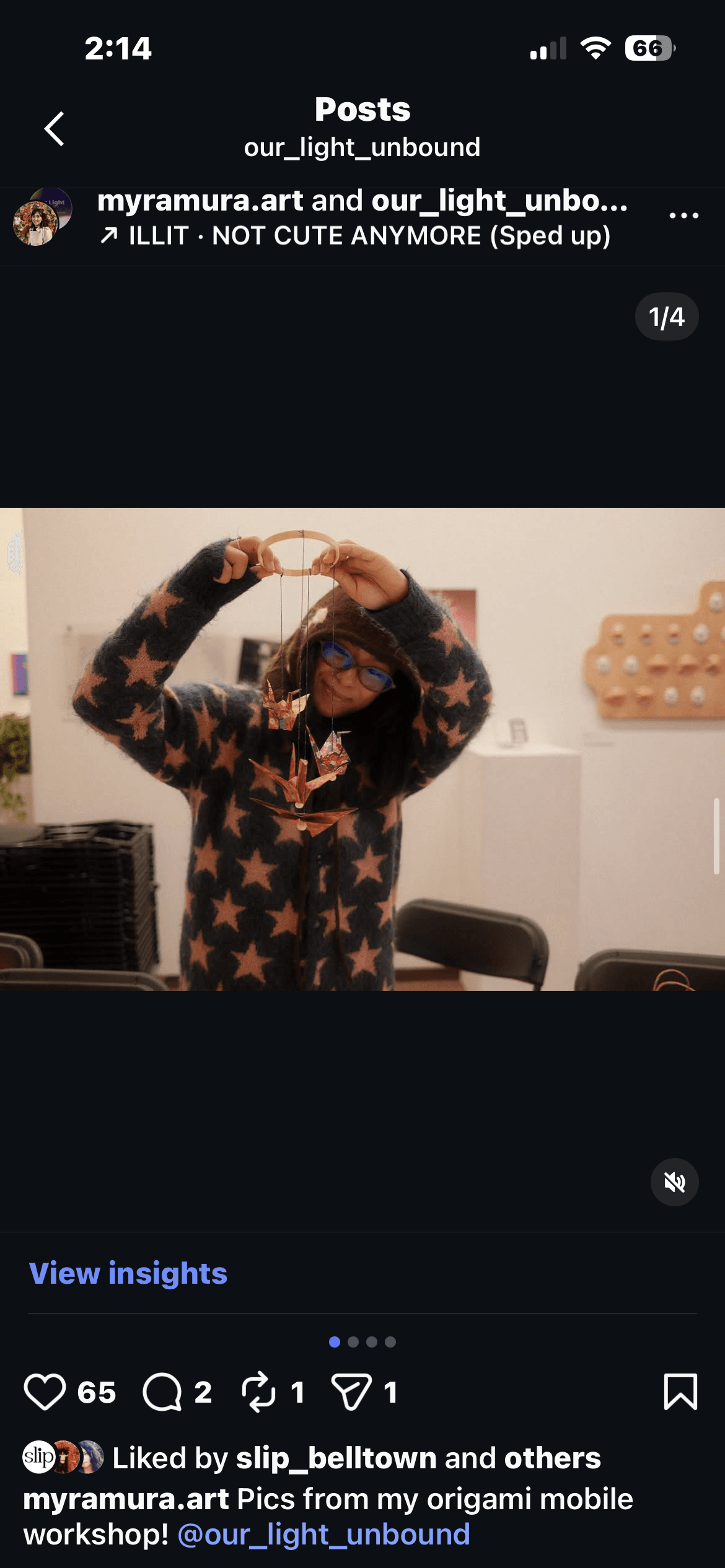
Instagram post from an origami mobile workshop at the exhibition, showing a participant holding up their completed origami mobile, tagged @our_light_unbound
Origami mobile workshop post

Each artist received a dedicated shoutout post featuring their work, bio, and social media handles. We promoted the full event lineup — collage workshops, paint and sip, origami, an artist talk, and the closing event — through designed flyers linking to Eventbrite pages. The account also served as the launch point for the digital catalogue, with a post featuring the QR code that visitors would later scan in the gallery.

The social media strategy extended beyond the account itself. We collaborated with the gallery (@slip_belltown · slipgallery.com), partnered businesses, and the artists' own social platforms to cross-promote. The exhibition was listed as a community event, featured in local art walk promotions, and tagged across artist networks — creating a web of visibility that brought in visitors who might not have found the show otherwise.

The Exhibition

The show opened January 9 at Slip Gallery in Belltown, Seattle. The space filled with visitors from the art community and beyond — many discovering the artists for the first time through the social media campaign we had been building for months.

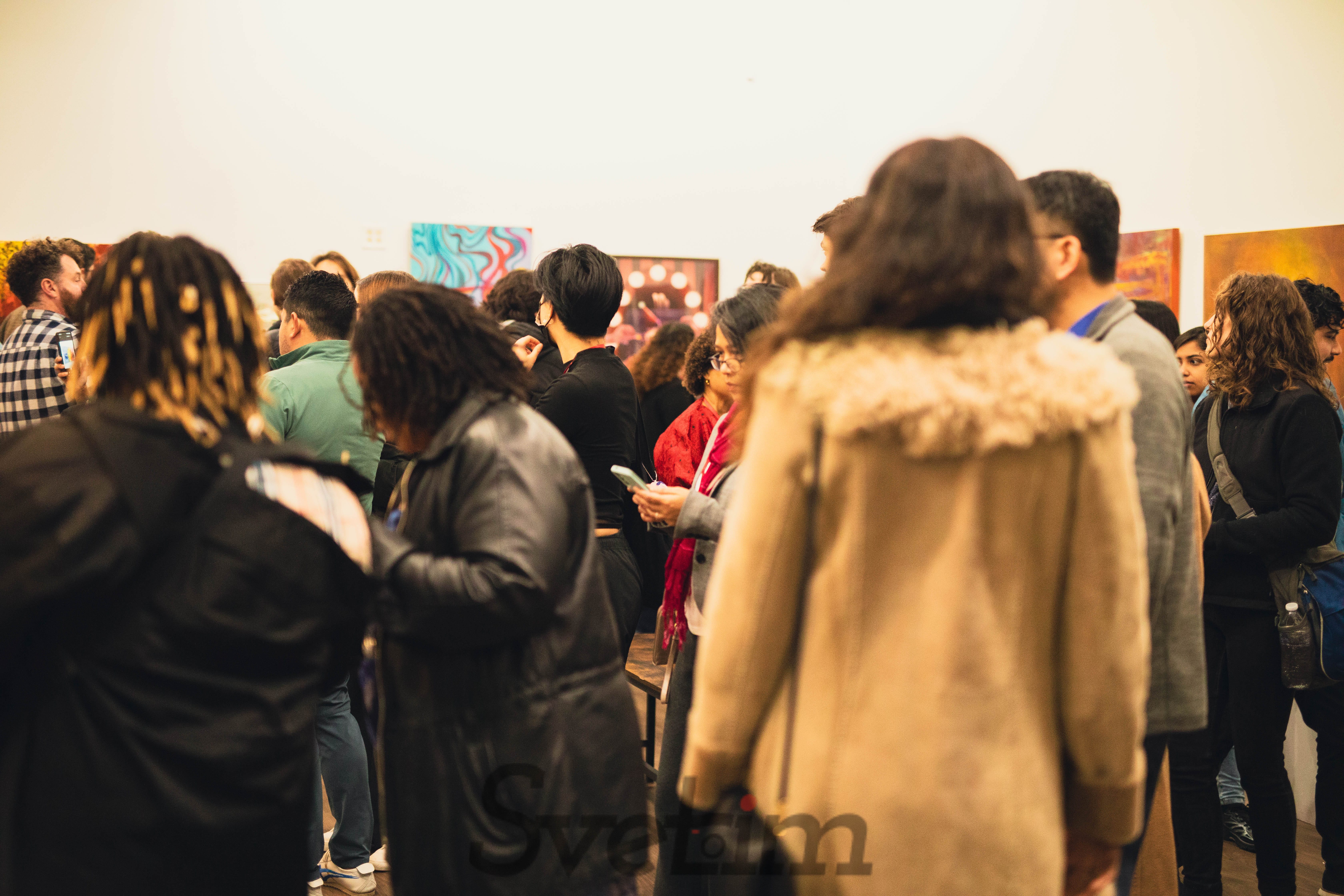
Opening night at Our Light Unbound — the gallery packed with visitors viewing artwork on the walls, artwork ranging from paintings to mixed media installations
Opening night crowdPhoto: @svetim.fm
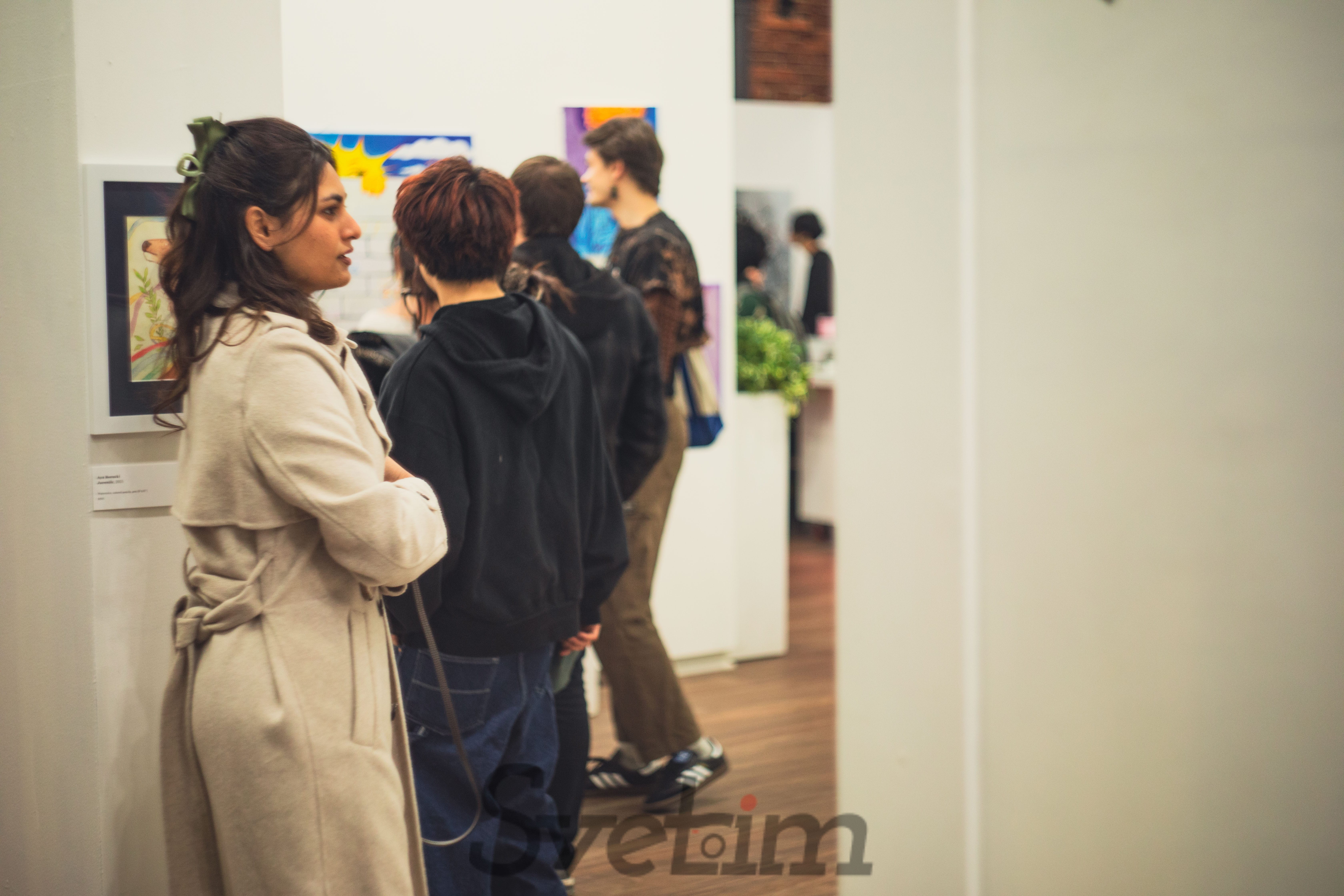
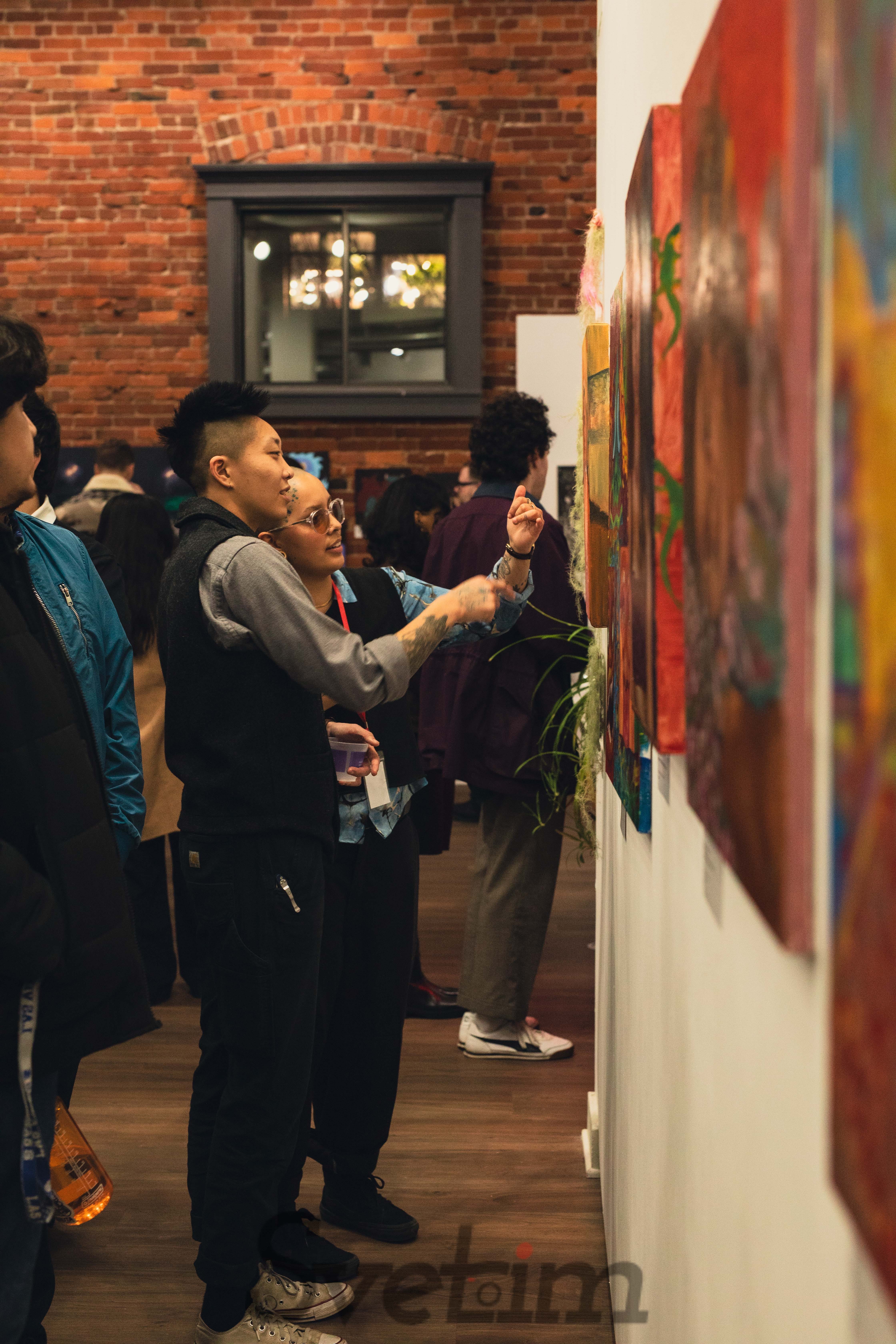
A visitor pausing to examine a framed artwork on the gallery wall, with other visitors browsing deeper in the space
Visitors examining artwork up closePhoto: @svetim.fm
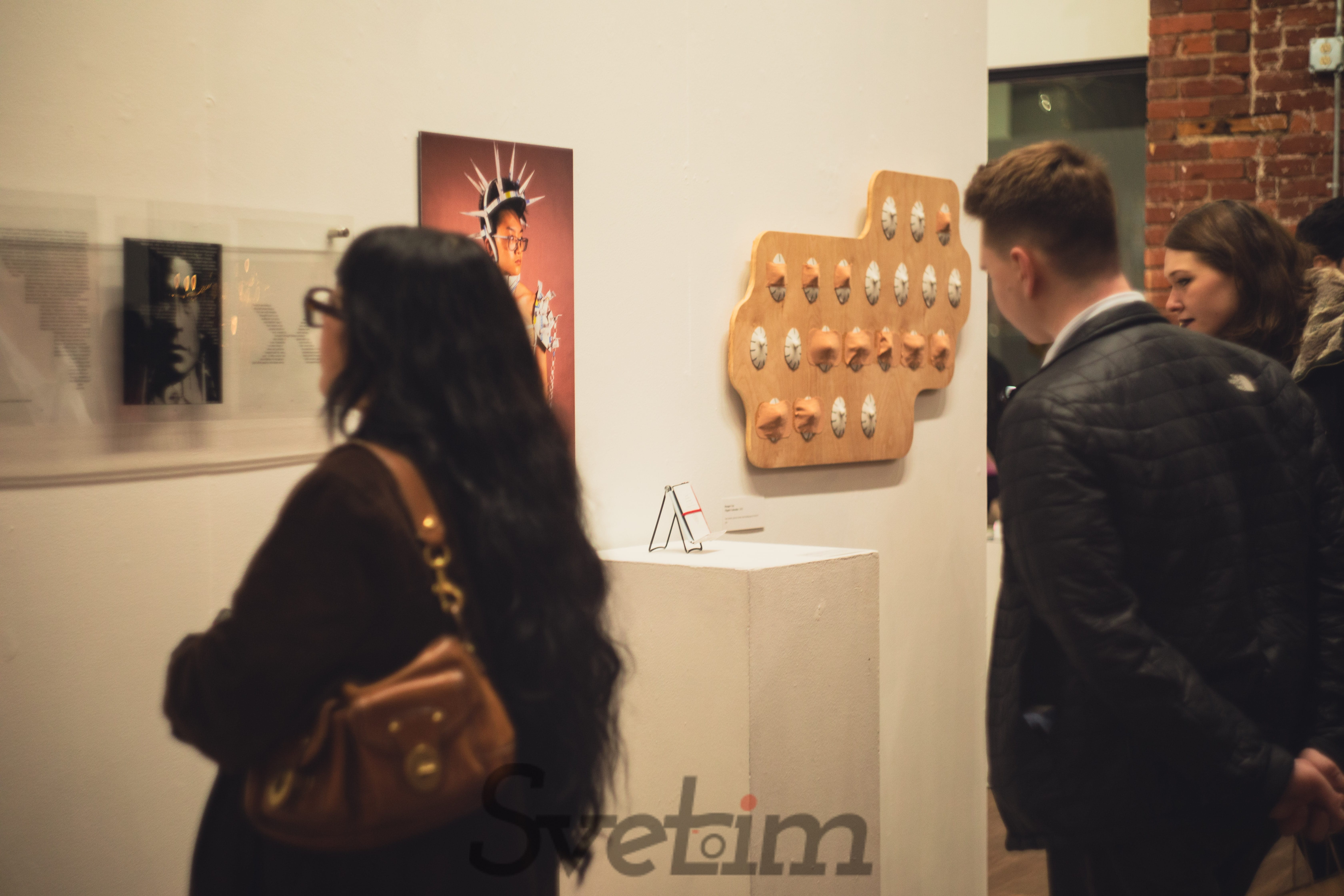
Gallery wall showing a mix of photography, sculpture, and mixed media art — small printed art labels visible beside each piece
Mixed media works and physical art labelsPhoto: @svetim.fm

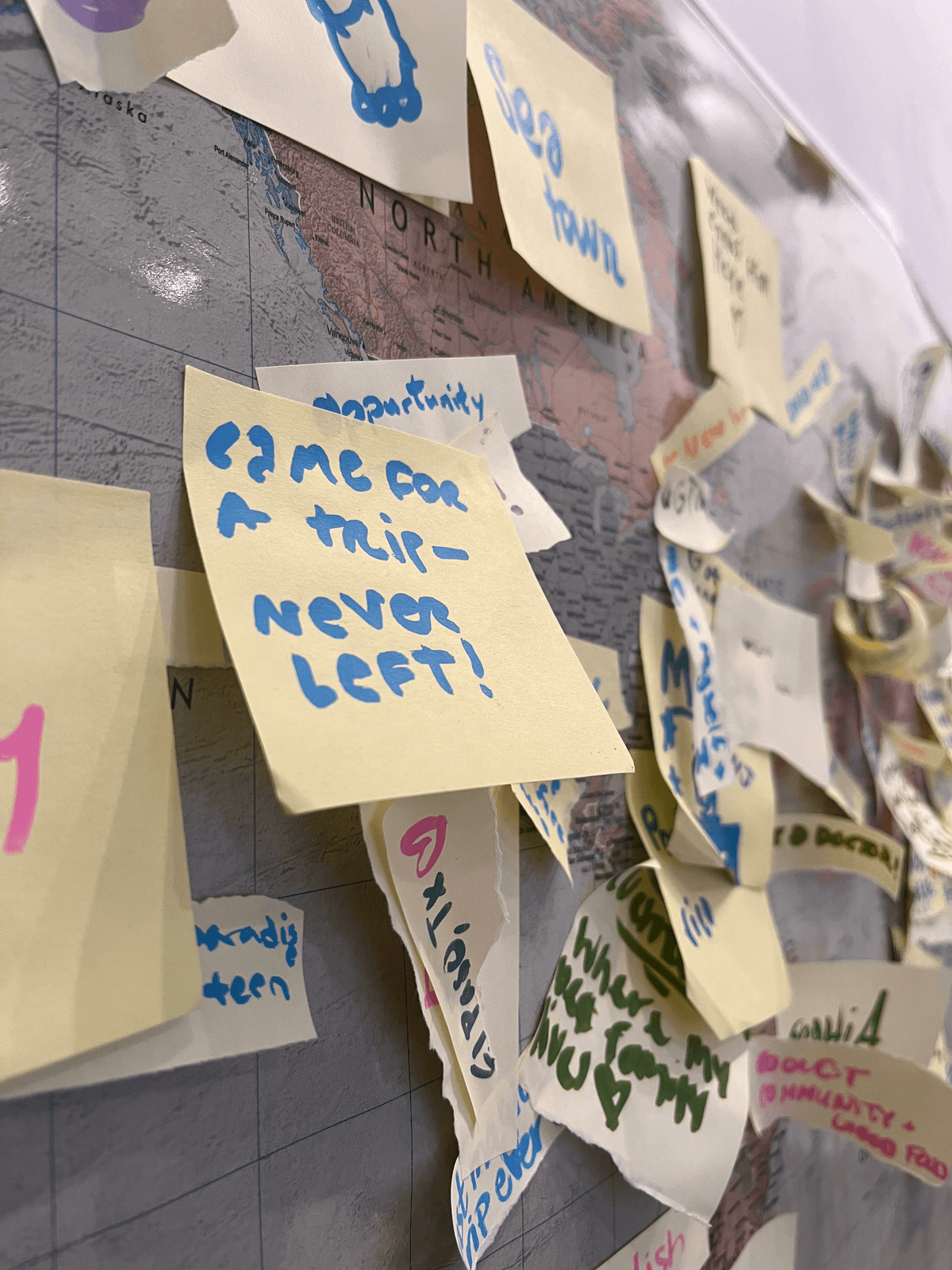
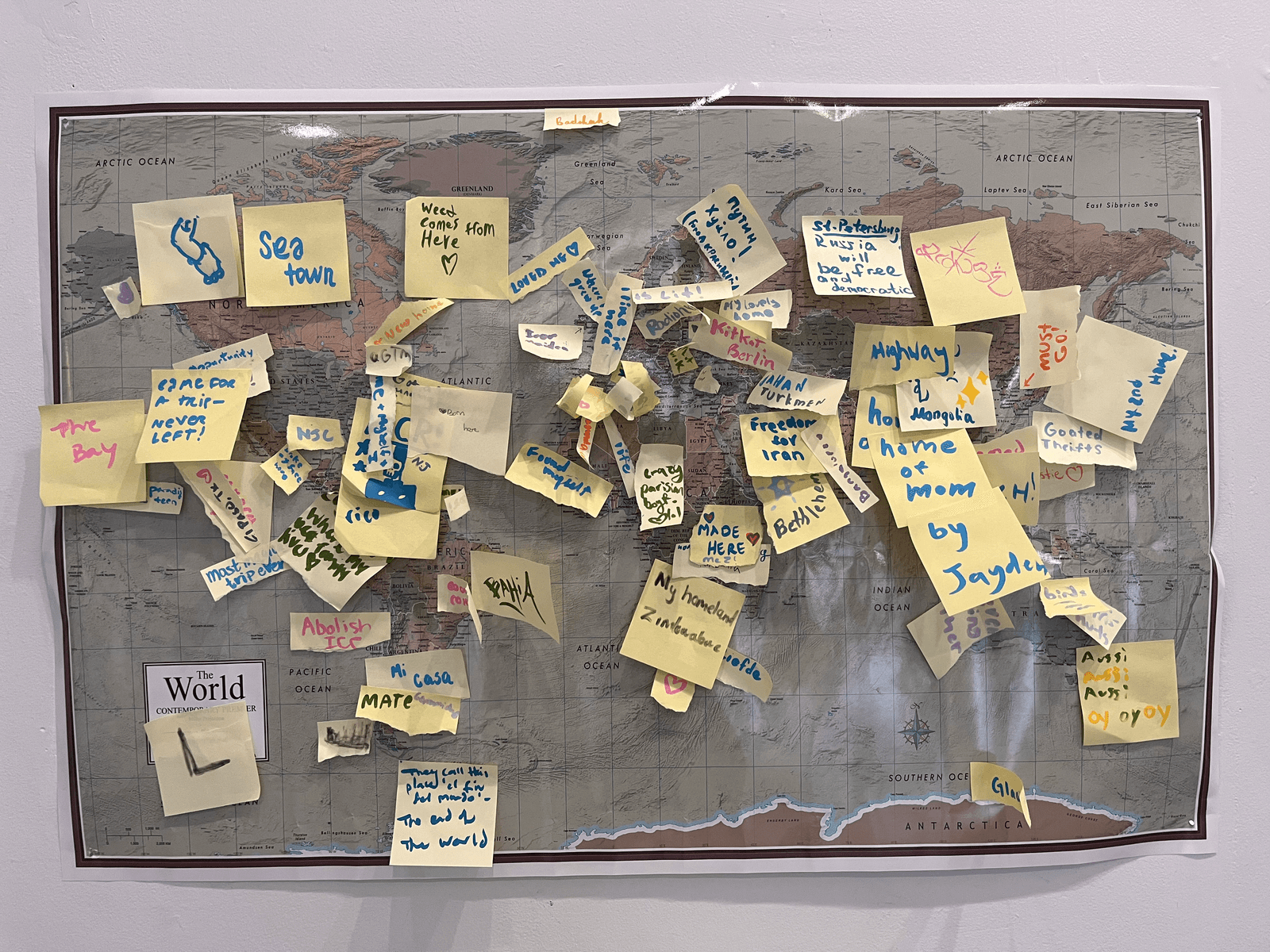
The exhibition featured emerging BIPOC artists working across painting, photography, sculpture, and mixed media. An interactive world map invited visitors to pin where they were from and leave a note — a small gesture that turned the gallery into a gathering place, not just a viewing space.
Close-up of the interactive world map covered in sticky notes with handwritten messages from visitors, including 'Came for a trip — never left!'
Visitor notes on the interactive world map
Full view of the interactive world map installation with dozens of sticky notes pinned across different countries and continents
The world map filled with notes by closing night
A curator talking with a visitor about the artwork on display, standing in the gallery surrounded by colorful paintings
Talking about the art with a visitor
Visitors examining paintings up close at the exhibition, pointing at and discussing the artwork on display
Visitors discussing the artworkPhoto: @svetim.fm
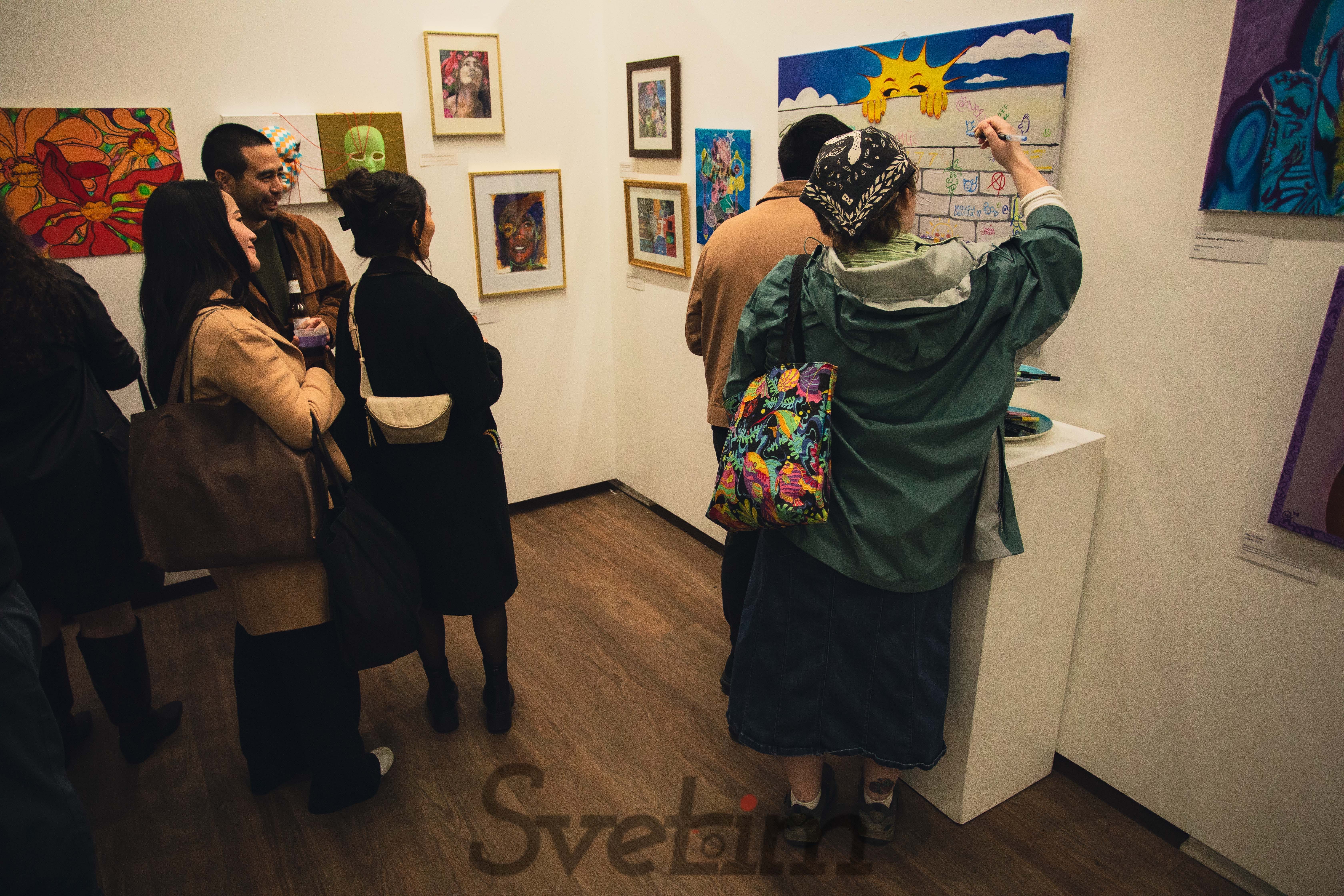
Visitors engaging with artwork and interactive installations, gathering around pieces and discussing them with each other
Visitors engaging with interactive installationsPhoto: @svetim.fm

Workshops & Events

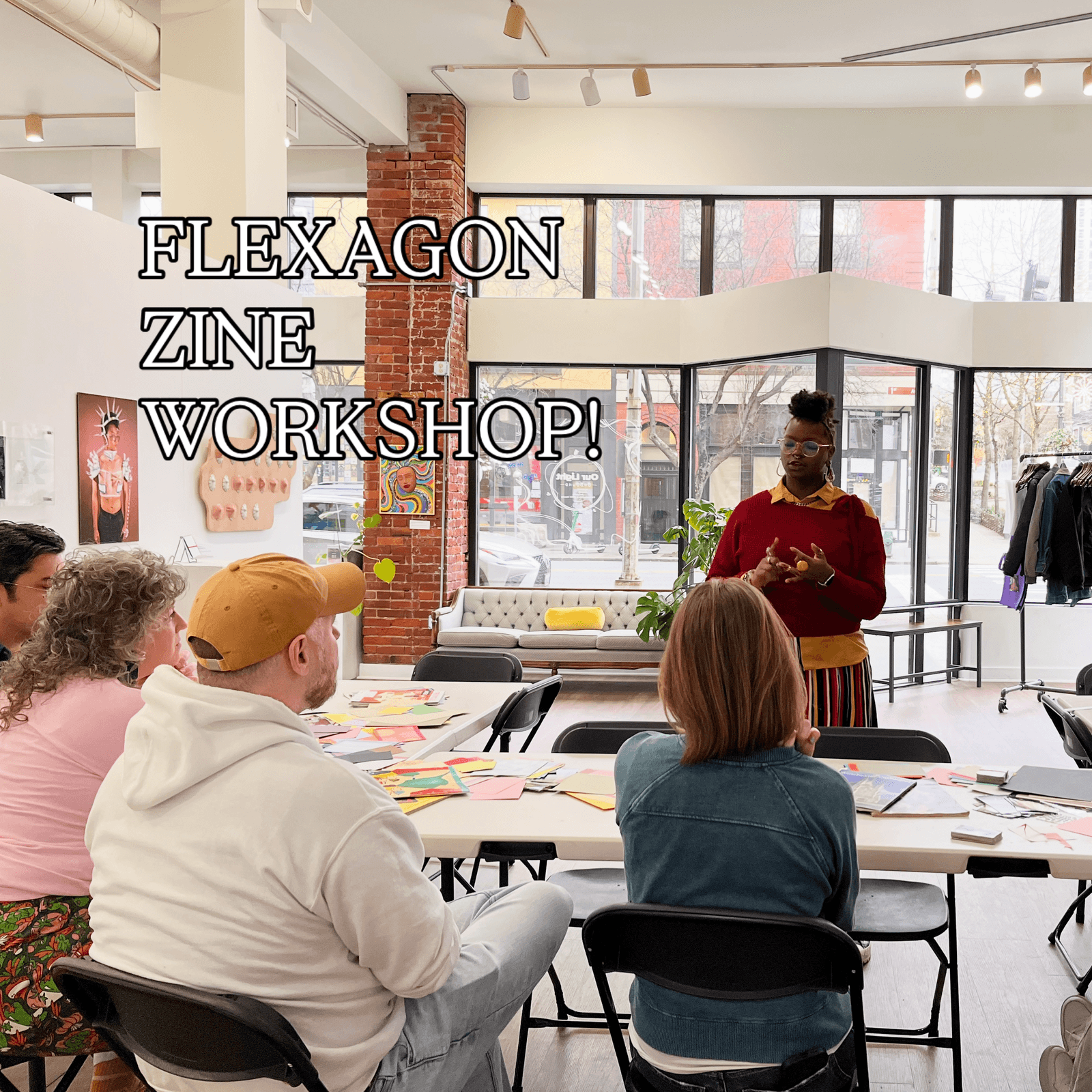
Throughout the month we hosted workshops — collage, paint and sip, origami mobiles, flexagon zines — and an artist talk, turning the gallery into an active creative space rather than a static display.

Click an image to see it full size with details.
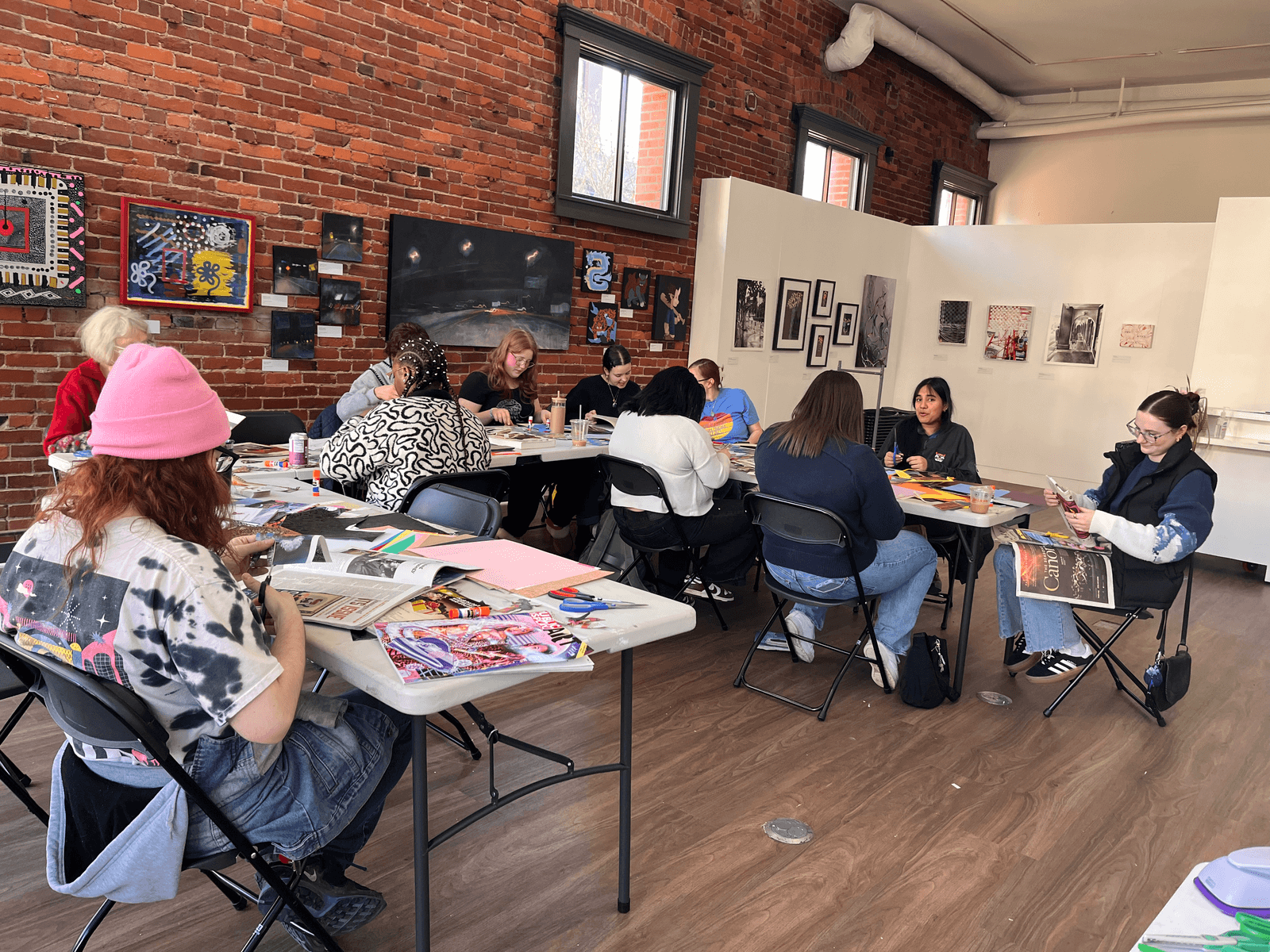
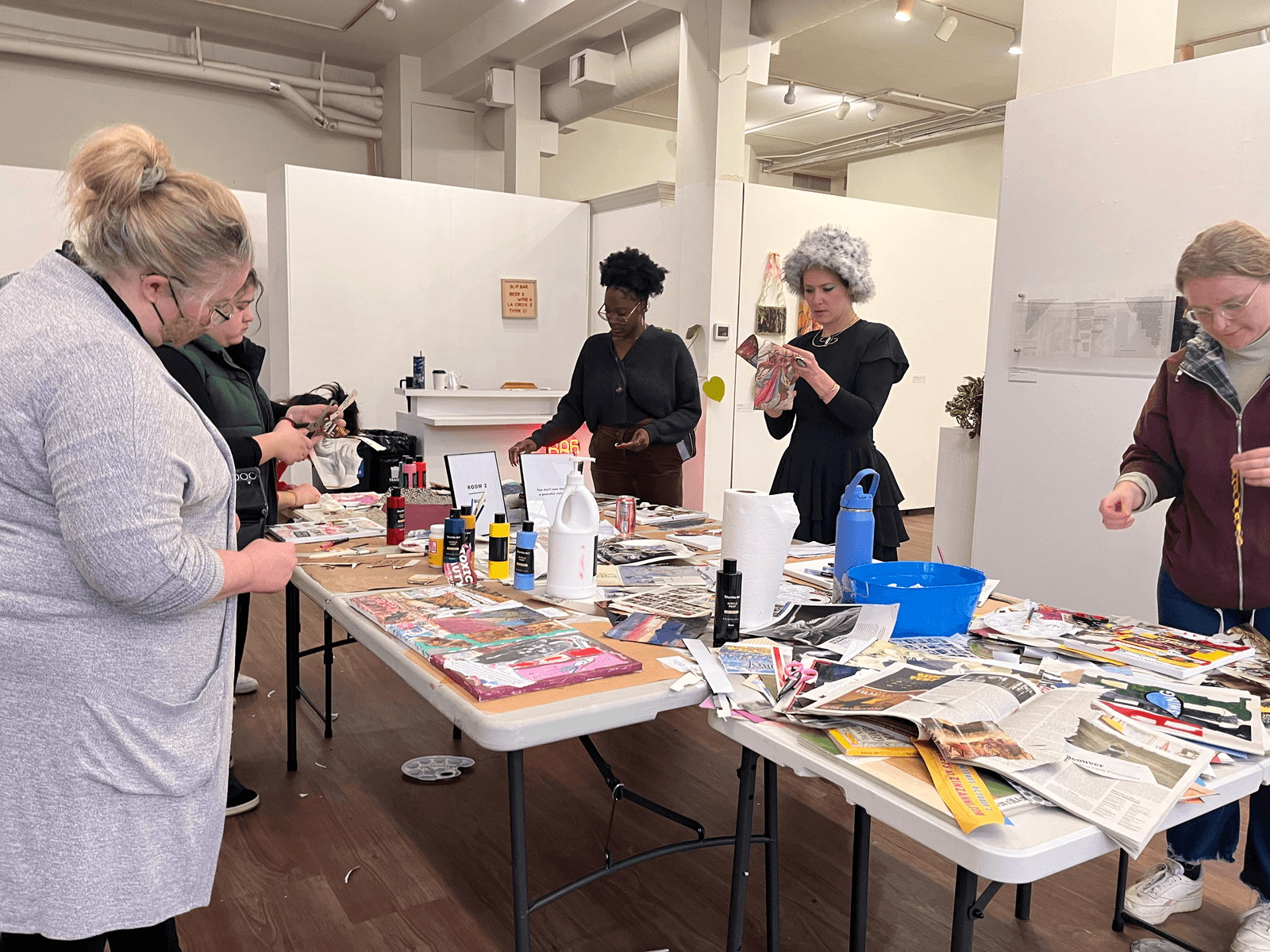
Participants seated at long tables working on collages during the collage workshop, surrounded by art materials and magazine clippings
Collage workshop
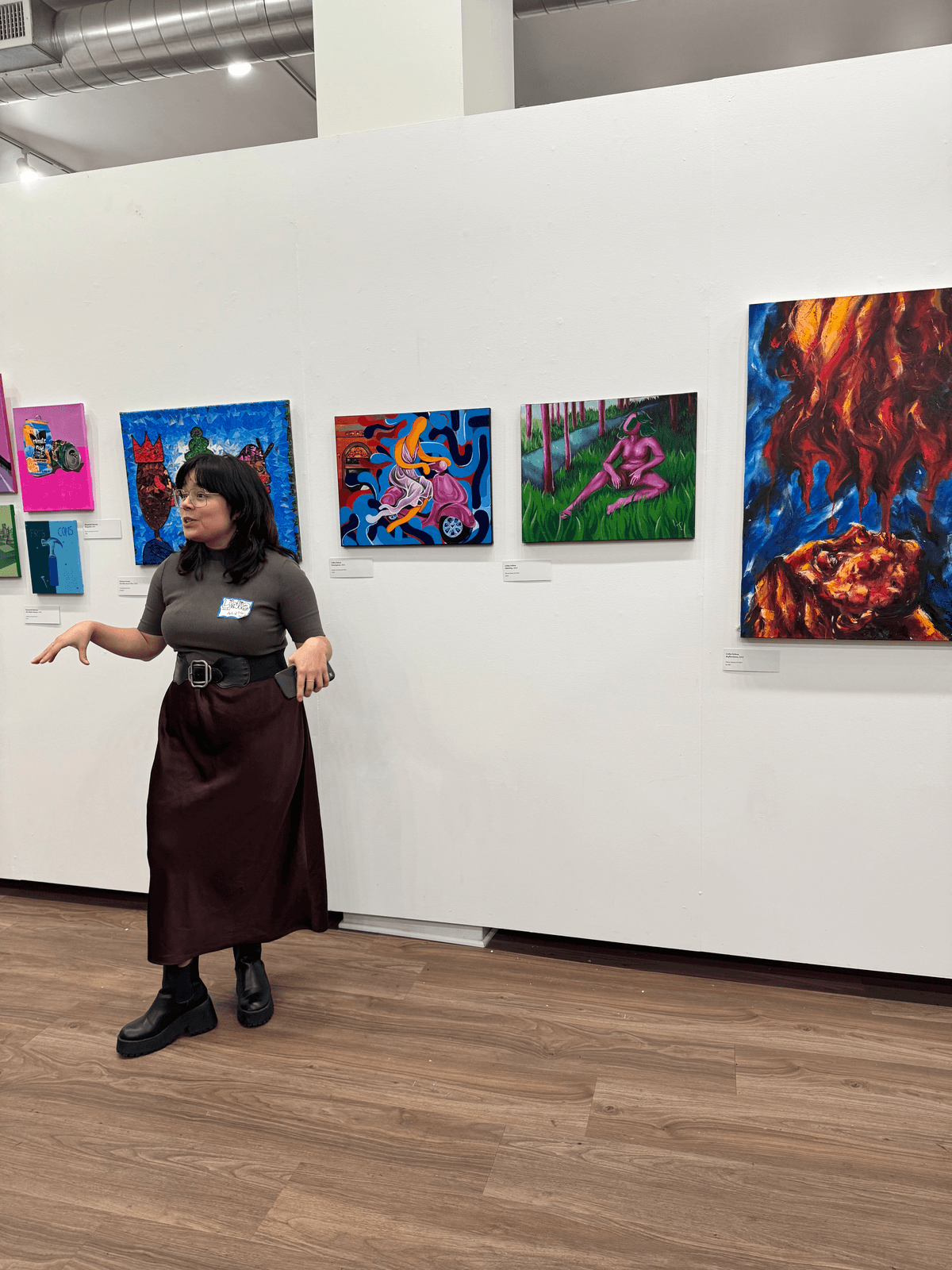
An artist presenting and gesturing toward their paintings on the gallery wall during the artist talk event
Artist talk
Participants at the closing event art activism workshop gathered around a table with collage materials, creating artwork together
Closing celebration — collective art action
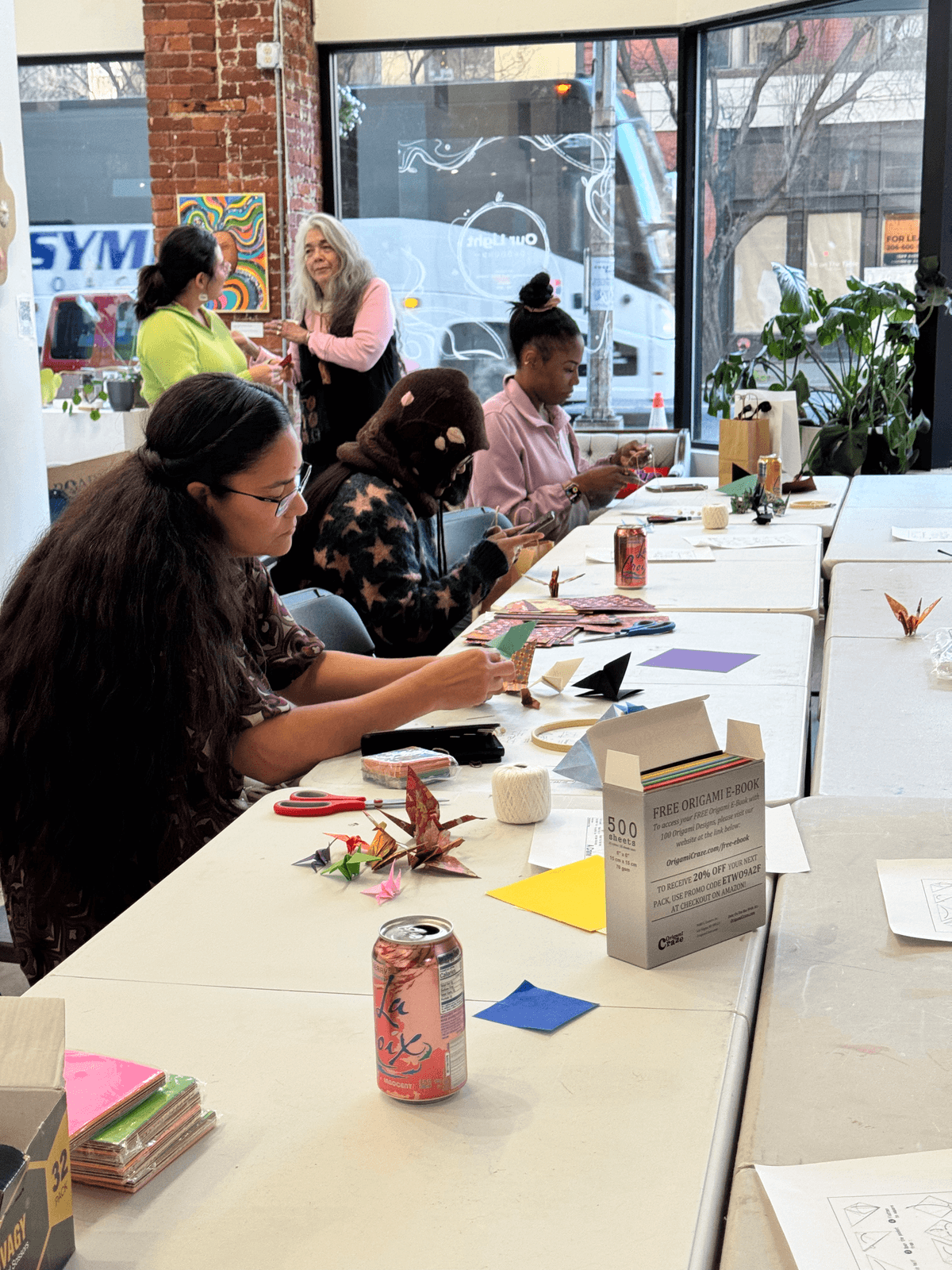
Participants folding origami cranes at a long table during the origami mobile workshop, with colorful paper and completed cranes visible
Origami mobile workshop
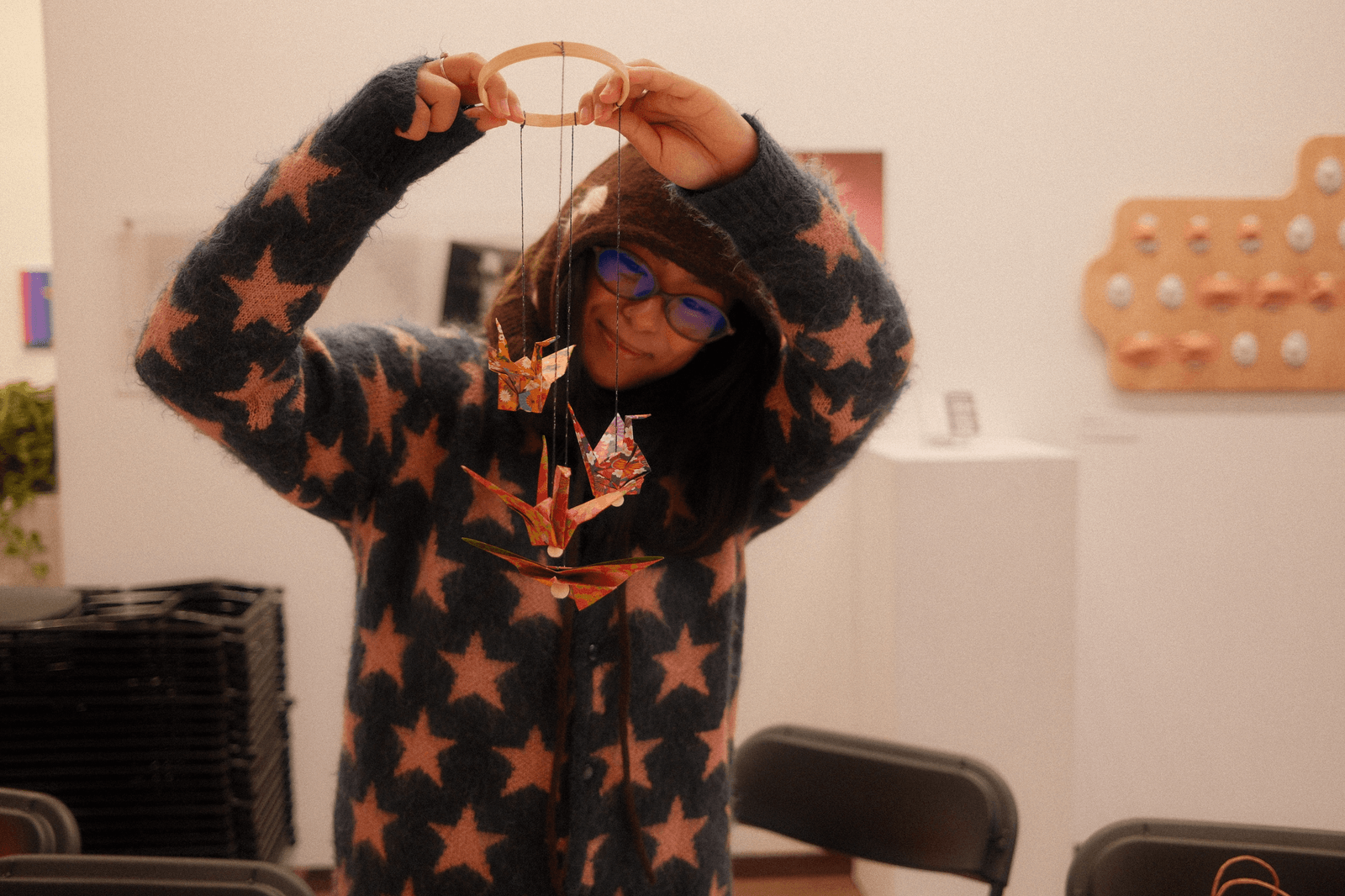
A participant holding up their completed origami crane mobile, smiling proudly at their creation
A finished origami mobile
An artist leading the flexagon zine workshop, standing at the head of a table with participants seated around colorful paper materials
Flexagon zine workshop

The Digital Catalogue

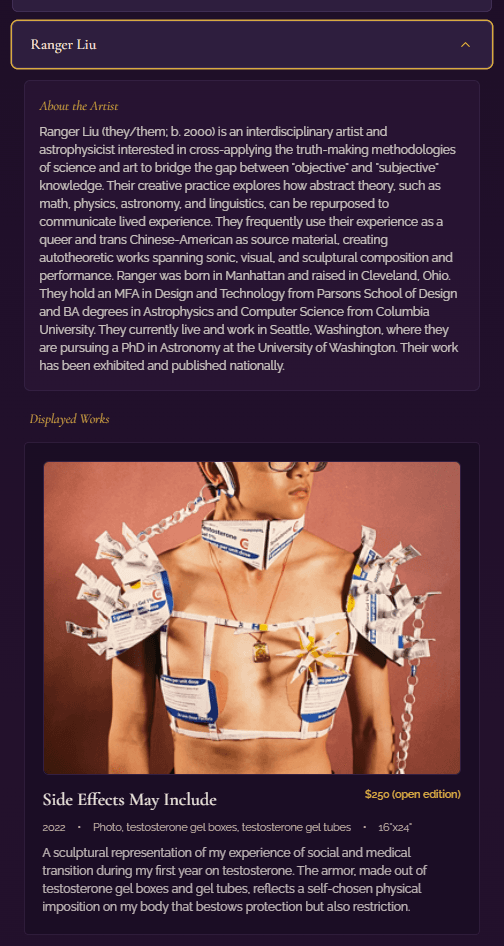
The catalogue was designed mobile-first — because the primary use case was visitors scanning a QR code at the gallery entrance and browsing on their phones while standing in front of the art. The deep purple and gold palette evokes twilight and candlelight, creating warmth within darkness. The search bar is a critical component, designed for quick one-handed use on a phone screen. It lets visitors find specific artists or artworks without scrolling, and an accordion-style catalogue organizes works by artist with expandable sections for biographies and individual pieces — all optimized for touch interaction and small screens.

Digital catalogue showing an expanded artist accordion for Ranger Liu with their biography, a photograph of their sculptural work 'Side Effects May Include' made from testosterone gel boxes and tubes, artwork details including price and dimensions, and the artist's description of the piece

Key Navigation Elements

Gallery Hours — immediately accessible via a prominent button, because the most common question for any exhibition site is "when can I visit?"

Upcoming Events — surfaces exhibition-related events and programming beyond the static gallery experience.

Contact for Purchasing — a direct path for buyers, separated from general inquiries to reduce friction for the gallery's most valuable interaction.

Design Process

Dark Theme Strategy

The deep purple (#1a0a2e) background with gold (#d4a537) accent text was chosen to feel luxurious and gallery-like. But dark themes require deliberate contrast work: I tested every text/background combination against WCAG AA thresholds, using lighter purples and off-whites for body text to avoid the eye strain that comes from pure white on near-black. The gradient overlays on the hero section use semi-transparent layers to ensure text remains legible regardless of the background image underneath.

Information Architecture

The core design question was compactness: how do you present a full exhibition's worth of artists, bios, and artwork descriptions without overwhelming the visitor? The artist accordion collapses content by default so visitors can scan the full catalogue without endless scrolling, then expand individual artists to explore their work. Each artist section contains a biography ("About the Artist") and their exhibited pieces with descriptions — all provided by the artists themselves — functioning as both a digital catalogue and an exhibition guide that visitors can access from anywhere.

Search

The search bar filters artists and artworks in real time as visitors type, making discovery instant whether someone is looking for a specific artist or just browsing. The search is prominently placed between the exhibition statement and the catalogue, following the natural reading flow: context first, then discovery.

Accessibility

The digital catalogue removes physical barriers — crowded wall text, small print, limited space — but the dark-themed design introduced its own accessibility challenges. The goal was to ensure that the immersive, atmospheric aesthetic never came at the cost of usability.

Contrast on dark backgrounds: Gold headings on deep purple tested above 4.5:1. Body text uses lighter tones (#e0d0f0) to reduce strain while maintaining readability.

Focus visibility: Custom focus outlines using the gold accent color — highly visible on dark backgrounds, unlike browser defaults which often disappear on dark themes.

Accordion semantics: Artist sections use proper expand/collapse patterns with aria-expanded, so screen reader users know which sections are open and can navigate the catalogue efficiently.

Search accessibility: Live search results announced via aria-live region, labeled input, and keyboard-navigable results — no mouse required to find an artist.

Outcomes

The exhibition ran for the full month of January 2026. Over 1,000 visitors came through on opening night alone, and 5 art pieces were sold during the run. The digital catalogue launched before opening night and served as the primary way visitors engaged with artist bios and artwork descriptions — both in the gallery via QR code and from home.

Exhibition

A 3-week exhibition at Slip Gallery featuring emerging BIPOC artists across painting, photography, sculpture, and mixed media. Over 1,000 visitors on opening night with DJ Tremendadiosa. 5 art pieces sold. Four workshops held during the run (collage, paint and sip, origami, artist talk) plus a closing event.

Community Reach

36 social media posts, 148 followers, and 930 profile views in 30 days. Opening night reel reached 2,500 views with 119 likes. Individual artist shoutouts ranged from 247 to 1,698 views. Cross-promotion with gallery, partnered businesses, and artist networks.

Digital Catalogue

A mobile-first, fully accessible, dark-themed digital catalogue with artist bios and artwork descriptions provided by the artists, real-time search, gallery hours, event listings, and purchasing contact flow. Designed for phones first — visitors scanned a QR code at the gallery entrance and browsed on their own devices.

Accessibility

WCAG 2.1 AA contrast on all text/background combinations in a dark theme. Keyboard-navigable accordion catalogue, labeled search with live results, semantic HTML, and custom gold focus indicators — eliminating the access barriers of printed wall text.

What I Learned

Co-curating an exhibition over 18 months taught me that the organizational work — the timelines, the shared drives, the divided responsibilities — is what makes the creative work possible. Planning with Yaz showed me how much stronger outcomes get when you build in buffer time and trust your collaborator's strengths.

On the design side, building the digital catalogue reframed how I think about accessibility in physical spaces. Printed artist statements are so standard in galleries that their limitations are invisible: small text, crowded walls, inaccessible to visitors with low vision or mobility constraints. Replacing them with a searchable, resizable digital format was not just a convenience — it was a fundamentally more inclusive way to share the artists' words. The dark theme added its own accessibility challenges, but the constraints forced better design decisions: the gold-on-purple palette that gives the site its gallery feel is also what makes focus indicators pop and headings scannable.

Working directly with the artists — receiving their bios and descriptions in their own words — also deepened my respect for collaborative content creation. The catalogue is better because the artists shaped it, not just me.

Next Steps

Image Descriptions

Work with artists to write meaningful alt text for each artwork — descriptions that convey the emotional and visual experience, not just "painting on canvas."

High Contrast Mode

Add an optional high-contrast toggle that increases text brightness and border visibility for users who need more than the AA minimum on dark backgrounds.

Future Exhibitions

Adapt the site template for future shows — the accordion catalogue, search, and event patterns are reusable across exhibitions with different themes and palettes.